Documentary · Paris
Documentary Cinematographer in Paris
Raphaël Molina, cinematographer and camera operator based in Paris, working on documentaries: natural light, handheld camera, light crew and a cinematic image, across France and Europe.
Fill in the form or call me on +33 6 60 82 31 80
Let’s talk about your project
A documentary in the works?
Tell me about your project in a few lines: format, dates, location. I’ll get back to you with my availability.
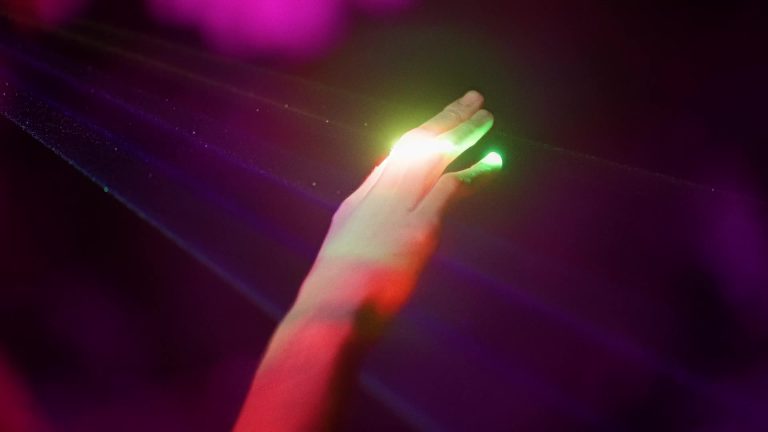 Play the 2026 showreel ▶
Filming real life with a cinematic image
I’m Raphaël Molina, a cinematographer, camera operator and gaffer based in Paris. Documentary is a field where the image has to find its place without ever overshadowing what is really happening in front of the camera. You have to be there at the right moment, know how to be forgotten, adapt to places and light you don’t always get to choose, and still keep an image that is carefully crafted, consistent and thought through.
That balance is what interests me: bringing the standards of a cinematic image to a shoot that is flexible, often light and sometimes unpredictable. A good documentary doesn’t just record a situation. It looks at it, chooses a distance, a point of view, a way of framing faces and gestures. The cinematographer’s role is to translate the director’s vision into images while staying open to whatever reality offers.
I work on auteur documentaries as well as portraits, brand films and event coverage. Whatever the format, I look for an honest image that respects the people being filmed and serves the film’s subject.
My background, from film sets to documentary
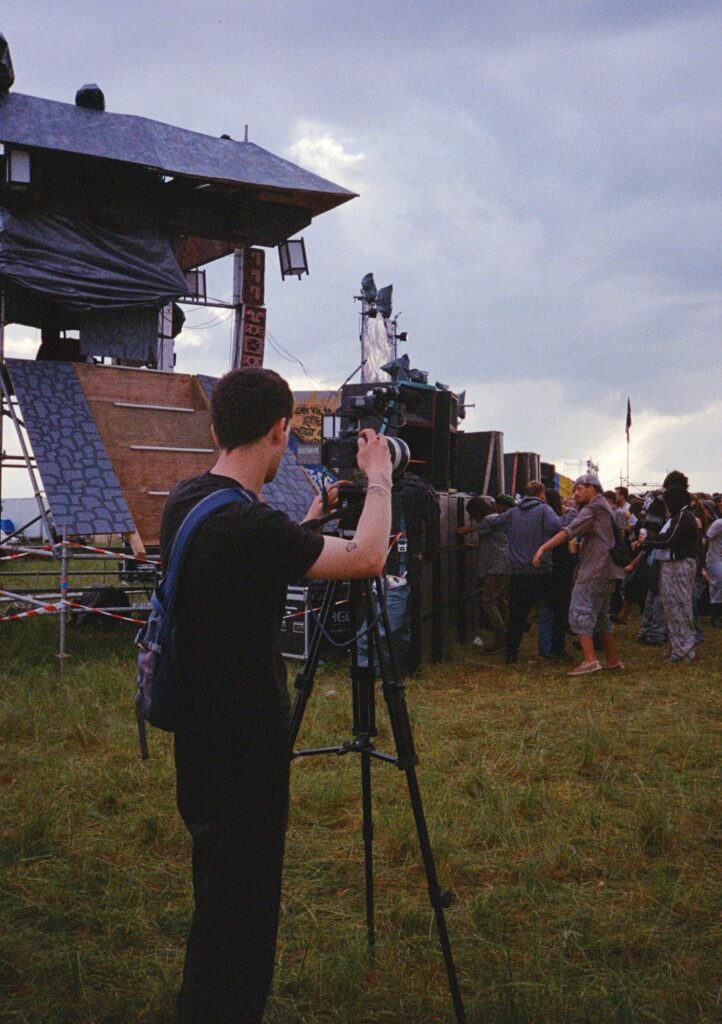
My experience comes from the film set. As a cinematographer, I have shot fiction short films, film school projects and freer formats such as festival aftermovies. As a gaffer and electrician, I have worked on feature films, commercials, music videos and documentary series released on Netflix, including « Y a-t-il un dealer dans l’avion ? » and « Outreau, un cauchemar français ».
The two practices feed each other. Working as an electrician taught me to read light, to understand how it shapes a face, and to build believable lighting with means suited to the location. Working as a cinematographer taught me to think about the image as a whole: coverage, lens choices, camera movement, consistency from one sequence to the next, all the way to the color grade.
On a documentary, this dual skill set is valuable. It lets me make the right decisions quickly in the field, when I have to frame, work with the existing light and stay attentive to what is happening, all at the same time.
My documentary projects
A documentary on mega-basins, as gaffer
I worked as gaffer on a documentary about the “méga-bassines”, the large agricultural water reservoirs at the heart of many debates in France. On this kind of subject, lighting has to stay discreet and believable: lighting the interviews and supporting the scenes filmed in the field, without ever feeling staged.
That shoot confirmed how much lighting in documentary is first a matter of listening: understanding the locations, adapting to the people being interviewed, and finding the right balance between a carefully crafted image and respect for the reality being filmed.
A documentary on free parties and raves in France, as cinematographer
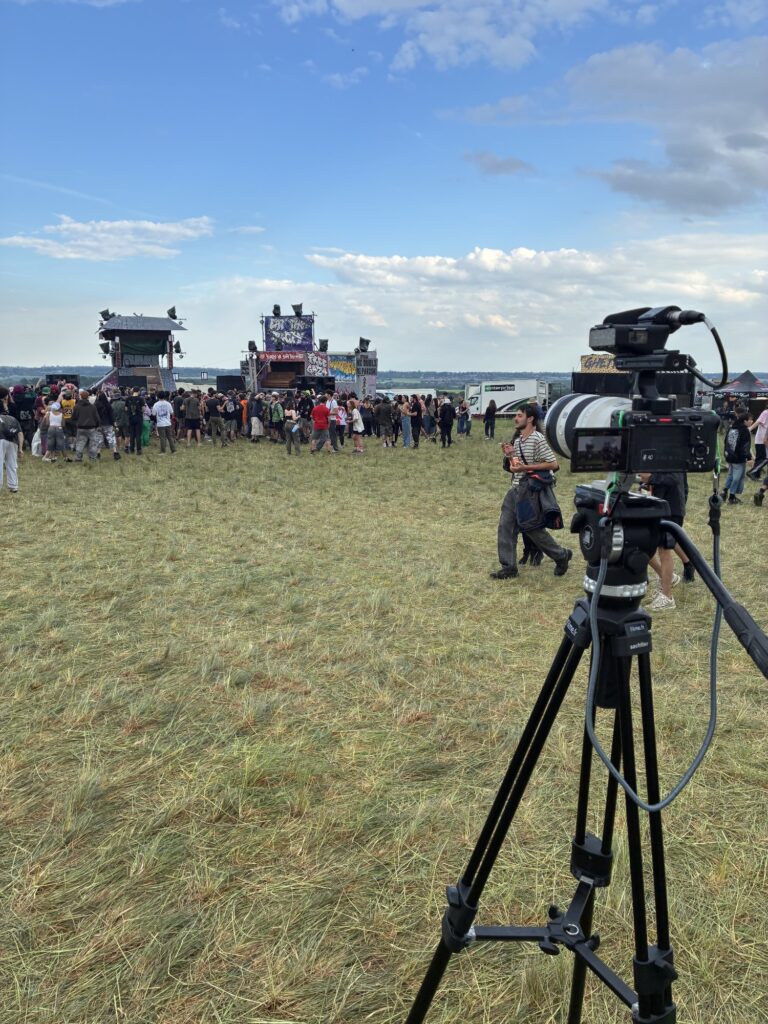
I am currently the cinematographer on a documentary, now in production, about free parties and raves in France. Filming these events means working at night, in low light, in the middle of the crowd and the sound, with a light and mobile setup.
It is a field where my experience of festivals and aftermovies, notably at Château Perché, really comes into play. You have to blend into the event, earn the trust of the organisers and the crowd, and capture the energy of a place without betraying it.
What I bring to a documentary shoot
An image designed with the director
Before the shoot, we define the visual approach together: where the camera stands, the distance to the people on screen, the balance between wide and close shots, movement, image texture and color palette. This upfront work means we arrive in the field with a clear intention while keeping the flexibility to adapt.
A light, responsive crew
I shoot handheld or on a tripod with a small crew and adapt to the constraints of the field: cramped interiors, exteriors, travel, long days, shoots spread over several weeks. A small crew is more easily accepted by the people being filmed and lets us get closer to what is happening.
Light, even when it isn’t scripted
My experience as an electrician and gaffer on fiction, commercial and documentary series shoots helps me build believable light with few resources. I favor existing sources and only add what is necessary, respecting the locations and the people.
Constant care for the people being filmed
Filming someone in their everyday life requires tact. I make sure the camera’s presence stays as discreet as possible, explain simply what we are doing, and help create a climate of trust that lets people remain themselves.
From shoot to delivery
When needed, I work with trusted editors and colorists so you keep a single point of contact through to delivery. I can also supervise the color grade to make sure the final image matches what we intended on set.
The documentaries I work on
Auteur documentaries, short or feature-length
On an auteur film, the image is fully part of the writing. I work closely with the director to find a form that suits the subject, whether it is an observational film, a more composed one or a mix of both.
Portraits and documentary-style corporate films
A portrait of a craftsperson, an artist, a researcher or an entrepreneur benefits from a documentary approach: real situations, real people, a carefully crafted image. It is also a sincere way to present an activity or a company.
Documentary series and web formats
Documentary series call for consistency: a coherent image from one episode to the next, a repeatable setup and efficient organization. I am used to structured shoots with scheduling and production constraints.
Event coverage, festivals and aftermovies
Filming a festival or an event is documentary work too: capturing the energy of a place, the faces, the moments that never happen twice. I shot the aftermovie of the Château Perché festival, staying close to the audience and the artists.
Brand documentaries
More and more brands choose documentary to tell their story, their craftsmanship or their commitments. I bring to these projects the rigor of a commercial shoot and the sincerity of a documentary approach.
Natural light and practical lighting
In documentary, existing light is often the starting point. A window, a desk lamp, street lighting or the shifting light of a day already say something about a place. My job is first to observe it, then to choose the right camera position and the right moment to film.
When needed, I add a light, discreet touch of lighting: a source to fill a face, a touch to separate a person from the background, a reflector to soften harsh contrast. The aim is never to transform the location, but to make the image readable and beautiful without betraying reality.
For interviews, I take the time to build more deliberate lighting that flatters the interviewee and stays consistent with the rest of the film.
How a documentary shoot works
1. The first conversation
We talk about the subject, the people being filmed, the schedule, the target format and how the film will be distributed. It is the moment to understand your intentions and the project’s constraints. I then send you a tailored quote.
2. Preparation
Depending on the project, we scout locations, define the shooting setup, choose the equipment and think through the coverage of the scenes we can anticipate. This preparation makes us efficient in the field and leaves more room for the unexpected.
3. The shoot
In the field, I stay attentive both to the image and to what is happening. I work closely with the director and the sound recordist to capture situations in the best possible conditions.
4. Post-production
I can follow the project through to the color grade, so that the final image matches the intention set at the start. Files are delivered organized and ready for editing.
Why hire a cinematographer for a documentary?
With today’s cameras, it is tempting to think a documentary can be shot without an image specialist. Yet the difference shows on screen. A cinematographer knows how to pick the right frame in a split second, anticipate a movement, expose correctly in difficult light and keep visual consistency across dozens of hours of footage.
That consistency makes editing and grading much easier. It also lets the director focus on what matters most: the relationship with the people being filmed, listening, conducting interviews and building the story.
Finally, a carefully crafted image gives the film a better chance of being selected at festivals, broadcast on television or a streaming platform, and seen by the audience it deserves. It is an investment that serves the film throughout its life.
Equipment
I have my own camera kit suited to light shoots, and I can add rental equipment depending on the project: cinema camera, lenses, stabilization, light fixtures. The setup is always chosen to suit the subject and the budget, never the other way around.
Documentary cinematographer or camera operator?
On a documentary, the cinematographer defines the look and the lighting of the film. They can also operate the camera themselves, which is very common with small crews. On a larger project, they may work with a camera operator, a camera assistant and an electrician.
Depending on your project and budget, I can work as a cinematographer, as a camera operator, or as both, with a crew suited to your production.
Documentary in Paris, France and Europe
Based in Paris, I shoot across the Île-de-France region and all over France. I also have lodging in Lyon, Montpellier and Vannes, which makes shoots in Auvergne-Rhône-Alpes, Occitanie and Brittany easier. I have a vehicle and travel with my equipment.
I speak fluent English, which lets me work with international crews and shoot abroad, in the UK and across Europe.
Contact
Preparing a documentary and looking for a cinematographer in Paris? Send me the subject, dates, location and target format. I’ll get back to you with my availability.